Let customers choose, book and pay online, with prices and availability the business can honour. Plan the order information and system connections your team needs to fulfil each purchase.
A website can take an order in a minute. The work it creates inside your business takes longer, and that’s the half that’s easy to forget when the project starts with a template and a payment button.
We design both halves together: what the customer chooses, sees and pays for, and what your team receives so it can deliver. Before a customer reaches checkout, they need to know what they’re buying and whether it suits them. Once they’ve paid, your team needs the order in a form it can use.
What the customer does
What your team receives
19:41
cothamskips.co.uk/skips
Choose your skip
BS6 6AJWe deliver here
4 yard miniAbout 40 bin bags
£210
6 yard builder’sAbout 60 bin bags
£285
8 yard builder’sAbout 80 bin bags
£340
Continue
1Chooses a skip, with what fits in each, and checks the postcode is covered
The order arrives with size, address, access notes and permit needs. Areas you don’t serve are turned away before payment.
19:42
cothamskips.co.uk/skips
Pick a delivery date
November
MTWTFSS2345678910111213141516171819202122
Thursday 12 November
Morning, 8 to 12Afternoon
Continue to payment
2Picks a delivery date that’s actually available
The booking lands in the diary against real capacity, not a promise somebody has to keep later.
19:44
cothamskips.co.uk/skips
Booked and paid
Order 4127, £285.00
Thursday morning6 yard skip to BS6 6AJ
Collected after 14 daysOr call to collect it sooner
We’ll text you when the driver’s on the way.
3Pays, and gets a confirmation saying what happens next
Payment is matched to the order for the accounts, and the driver’s run and collection are scheduled.
A skip-hire order on a phone: the customer chooses a 6 yard skip and confirms the postcode is covered, picks an available morning on Thursday 12 November, then pays £285 and gets a confirmation. At each step the business receives the order details, a booking against real capacity, and a matched payment with the driver’s run scheduled.
Skip hire and waste management, South West
Towens: online skip booking and payment
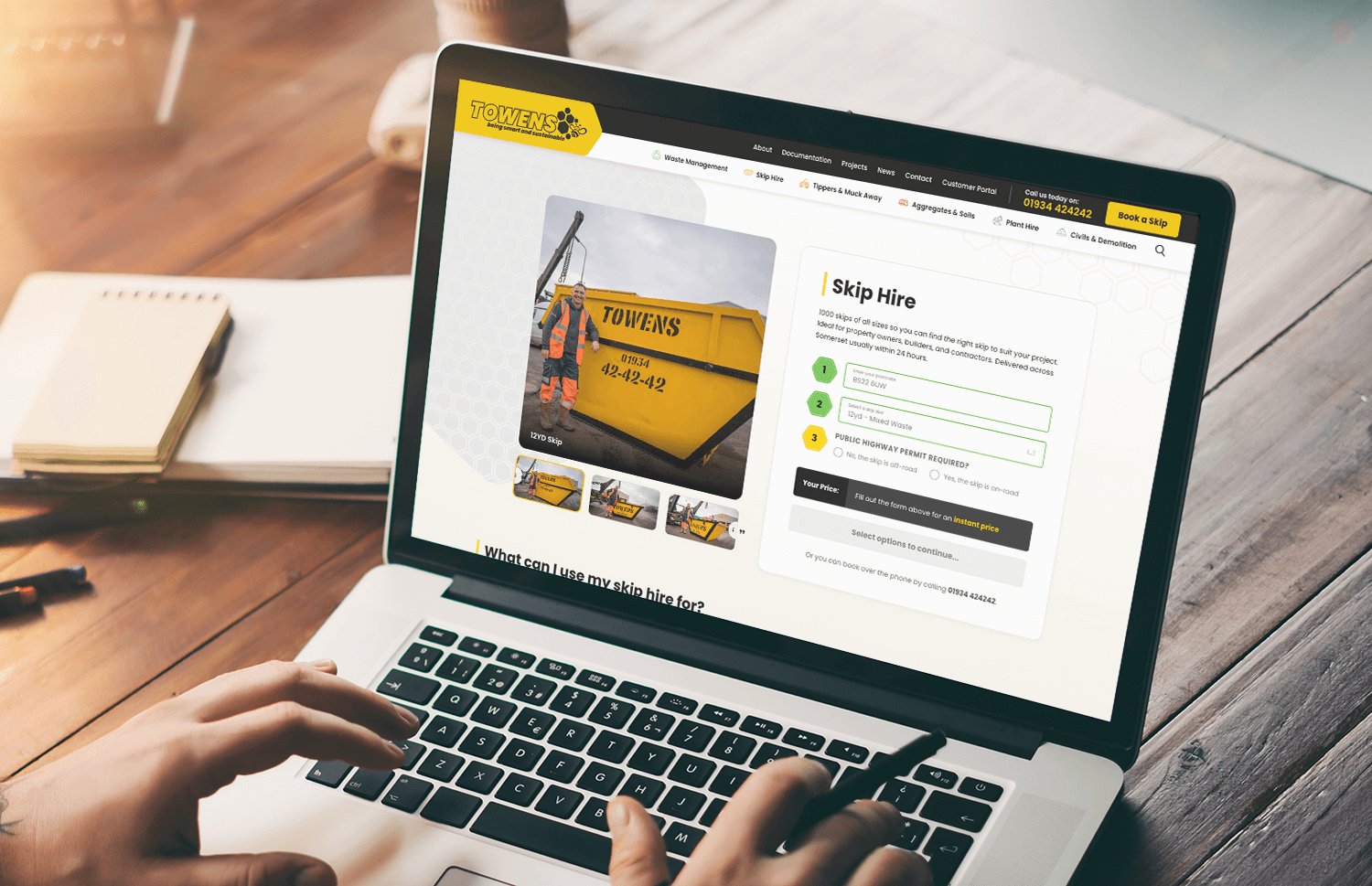
Towens wanted builders and homeowners across the South West to arrange a skip without waiting for a phone call. The new website lets them choose a skip, book a date and pay online at any hour, with each order passed into the CRM so the team has what it needs to deliver.
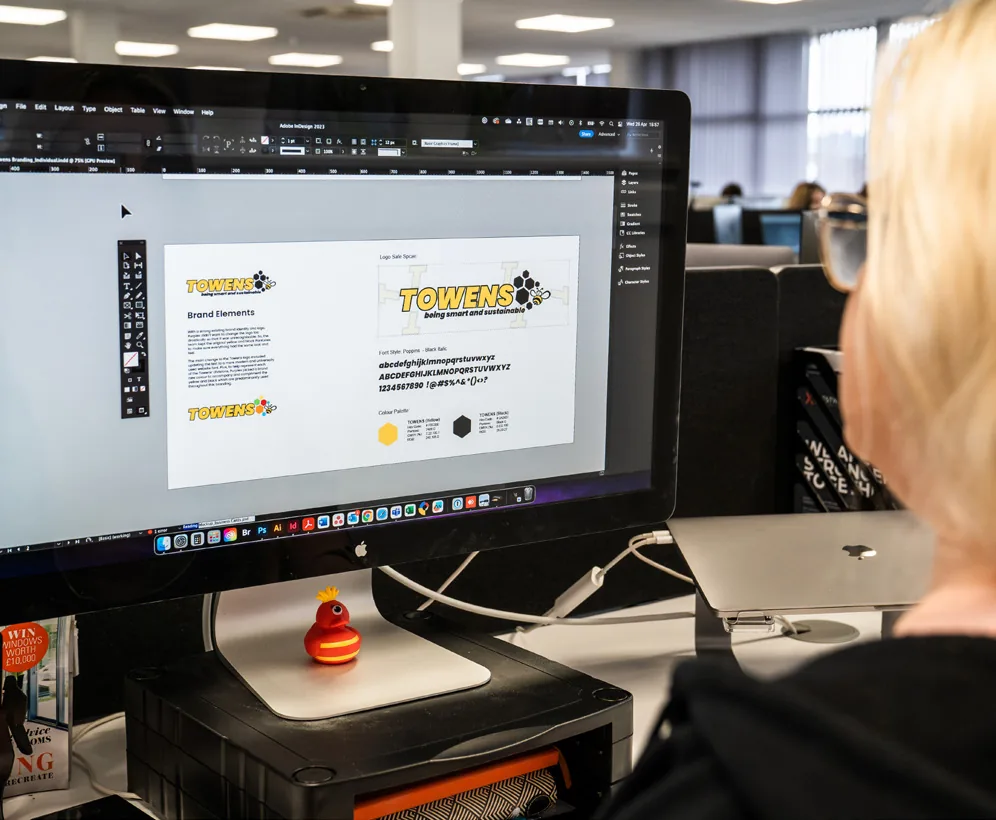
Alongside the website, Purplex refreshed Towens’ long-established brand without losing what customers already recognised, then ran the SEO that brought people to the new site. For a service business considering online sales, it shows the three things to resolve together: the customer’s choice, the booking and payment, and the information passed into the business.
£86,000+in online skip-hire salesIn the first six months after the website launched.
“Partnering with Purplex has been a good call. Thanks to their experience and in-depth industry knowledge the team really understands our business – and the results back that up.”
What changes whether a customer can buy
Variants, trade prices and delivery terms can change a product decision. For a service, location, dates and capacity may decide whether the order can be accepted at all. We map those choices with you before choosing the platform and designing the purchase, so the website only offers what the business can reliably deliver.
Skip, plant or tool hire
What the customer has to choose
Size, dates, delivery address
What the business has to check
Area covered, capacity on the day, permits
What happens after payment
Booking in the diary, driver scheduled, collection arranged
Trade orders on account
What the customer has to choose
Products, quantities, delivery or collection
What the business has to check
Account prices, credit terms, stock
What happens after payment
Order into the accounts or ERP system, picking list, delivery note
Samples and swatches
What the customer has to choose
Colours, finishes, how many
What the business has to check
Limits per customer, postage
What happens after payment
Dispatch, then a follow-up when the samples have arrived
Deposits for surveys or installations
What the customer has to choose
The service, a preferred date
What the business has to check
Area covered, surveyor availability
What happens after payment
Appointment confirmed, deposit recorded, job created
Ecommerce measurement and improvements
Once people begin using the site, product interest and checkout progress show where the purchase gets difficult. Customer questions and feedback from fulfilment add the explanation a report can’t always provide. We use those sources to choose the next improvements, with search, campaign and conversion specialists available where the sales objective needs them. As the range or operation changes, the store needs attention to stay accurate and useful.
The one that fits your products, prices and systems. We work through how you sell, the integrations you need and who’ll run the store day to day before recommending a platform, rather than starting from a favourite.
Can trade customers see their own prices?
Often, yes. Account pricing, minimum quantities and credit terms depend on the platform and where your prices are held today. We check that early, because it shapes the whole build.
Can customers book a service as well as buy products?
Yes. Dates, locations and capacity can be built into the journey, so customers only book what you can deliver. Towens customers choose a skip, pick a date and pay in one go.
Where do orders go after payment?
Wherever your team needs them: your CRM, accounts or fulfilment system. We agree what the customer receives, where the order goes and how exceptions are handled, such as a postcode you don’t cover or an item that’s out of stock.
Can you look after the store after launch?
Yes. Support, updates and planned improvements are agreed separately from the build, so you know what’s included and what would be scoped as new work.
Find out what’s stopping customers buying online.
Free website review
Find out where your website loses the people it should be winning.
Whether your main pages answer what customers need to know
How your work, products and evidence come across
The journeys from finding a product or service to asking for a quote