If relevant searches and your enquiries have both fallen
Review product demand, local visibility and recurring sales objections together. Ask the sales team whether customers are discussing different materials, configurations or project types.
Find out what’s affecting a buying decision before committing to the next move. Customer interviews, surveys and market evidence can test the assumptions behind a product, audience or proposition.
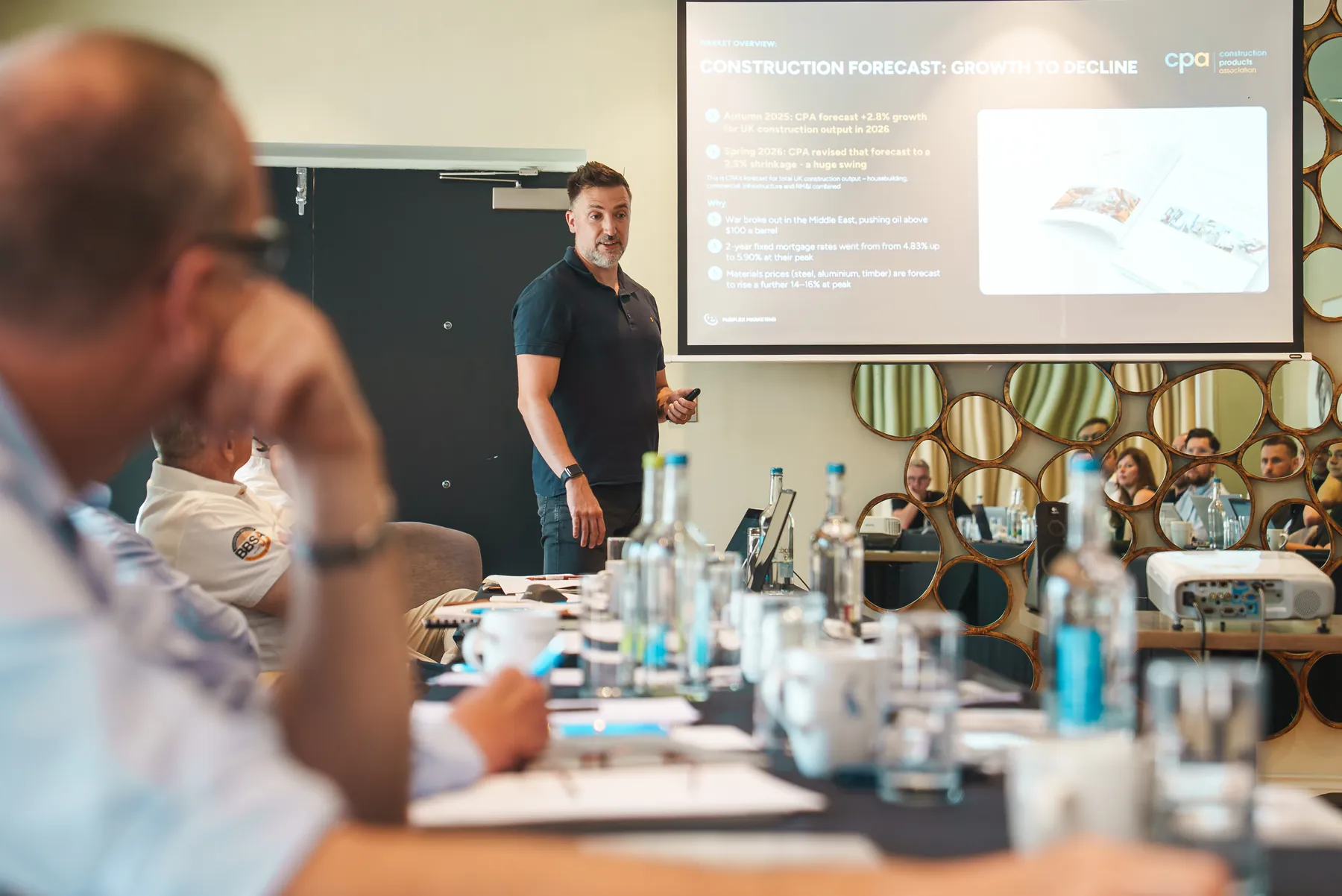
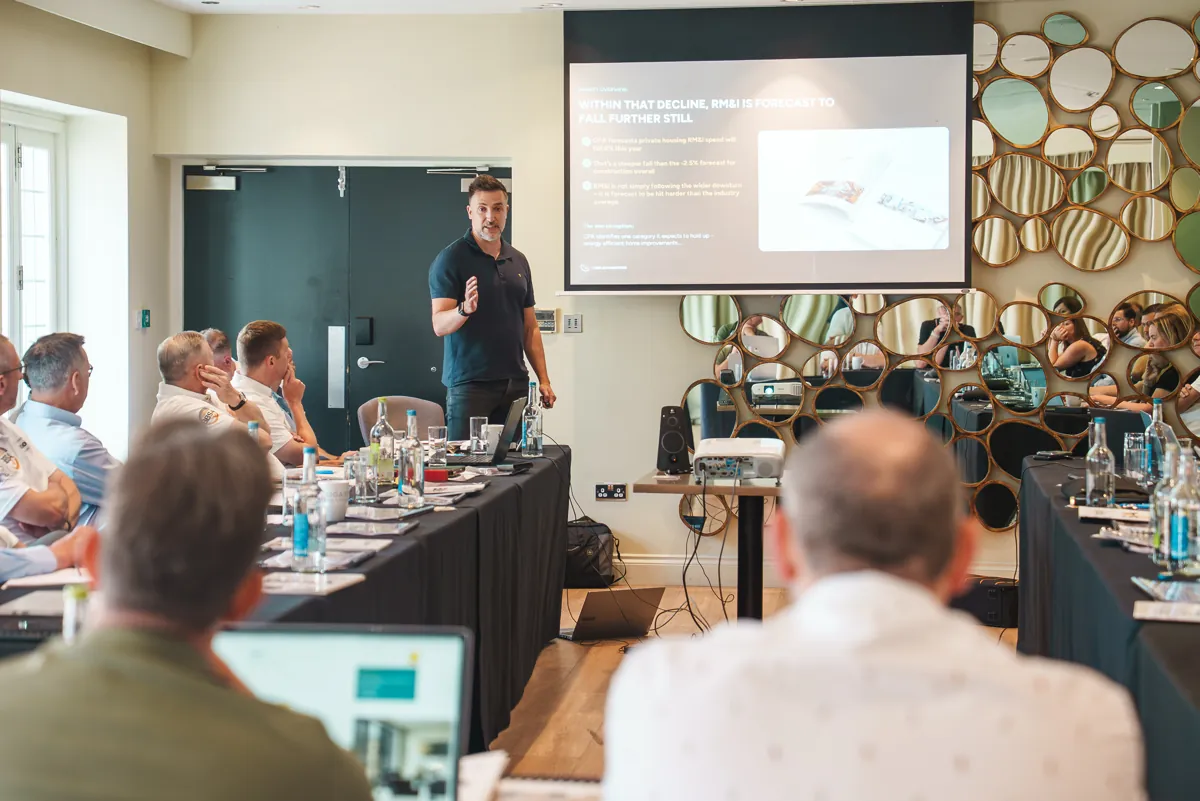
Purplex’s State of the Industry analysis tracks search demand across selected home-improvement terms. From January to July 2025 it recorded 41.96 million searches, 5.2% fewer than in the same months of 2024.
Broad market interest can fall while a particular product, service or area keeps producing worthwhile work. Before changing the budget, put the trend next to your enquiries, quotations and sales.
Review product demand, local visibility and recurring sales objections together. Ask the sales team whether customers are discussing different materials, configurations or project types.
Find out which products and locations are still producing suitable work before moving money. Your own experience may differ from the national trend, and that difference is worth knowing.
Either way, end the review with a decision and the evidence behind it, so the next review can see whether it worked.
If trade customers prefer another supplier, find out which part of its offer matters to them. Price, product fit, availability and application support point to different responses, and each needs different evidence.
Give someone room to explain a decision in their own words. A small number of well-chosen interviews can show why buyers hesitate or choose elsewhere.
They describe the people you spoke to, not the whole market.
Examine defined questions across an agreed group, such as the installers who stock a range or the homeowners who asked for a brochure.
A market-wide conclusion needs a sample suited to that claim.
Search patterns, competitor activity and the evidence already in your sales records add perspectives that people rarely volunteer.
Data shows what happened. It rarely explains why.
Your customers can explain what buying from you is like. Prospects and former customers may be better placed to explain a hesitation or an alternative. In building products, the person specifying, distributing or installing a product can also shape the outcome without being its end user. We agree whose views the research needs and how those people can be reached. The findings describe the participant group and its limits, so your team can use a small interview study with a clear understanding of what it represents.
A useful report makes the next choice easier to discuss. We show what the evidence suggests, explain our recommendation and identify the questions still open. The response might be a clearer product explanation, a different audience or a smaller offer test before committing to a launch. Leadership, sales and marketing receive enough context to understand the reasoning and use it in the next brief. Where the evidence leaves a material uncertainty, that stays visible.
The work can include research design, interviews, surveys, market and competitor reviews, followed by findings and recommendations. We agree the question, participants, existing sources and outputs before starting. A focused study can be the right first step when the main uncertainty is clearly defined.
We share our Weston-super-Mare headquarters with our sister company Insight Data, part of the Ascot Group. Purplex used its industry information in the targeted email campaign for Dekko’s Residence Collection 9 launch, described on our lead generation page.
If your question isn’t here, call 01934 808132 or email [email protected].
Not always. A small number of well-chosen interviews can be valuable for understanding a decision, while representative quantitative conclusions require an appropriate sample. We choose the method to fit the question.
Your customers can explain what buying from you is like. Prospects and former customers are often better placed to explain a hesitation or an alternative. In building products, the specifier, distributor or installer can shape the outcome without being the end user. We agree whose views the research needs and how to reach them.
Yes. A competitor and market review looks at how the alternatives present their offer, where they’re visible and what customers are comparing. We combine it with evidence from your own customers and sales, so it informs the decision rather than replacing it.
A specialist looks at how your marketing brings in enquiries and shows you where they’re leaking.
Tell us what you need and where it’s stuck. We’ll come back to you within one working day with the right person for the job.



A specialist replies within one working day. You’ll hear from someone who knows construction, building products and home improvement.
What would you like to know before making a decision? We can help define a research project that gives you useful answers.
01934 808132[email protected]The work can include research design, interviews, surveys, market and competitor reviews, followed by findings and recommendations. We agree the question, participants, existing sources and outputs before starting. A focused study can be the right first step when the main uncertainty is clearly defined.
Not always. A small number of well-chosen interviews can be valuable for understanding a decision, while representative quantitative conclusions require an appropriate sample. We choose the method to fit the question.